
1
Every word secretly belongs to one group.
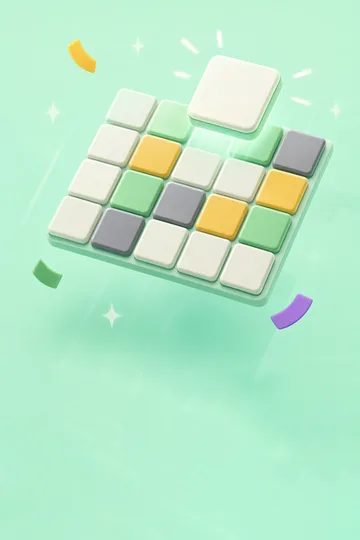
Sixteen words sit in a 4×4 grid — no labels, no hints. Four of them share a hidden link, and so do the other twelve, in three more groups.
Group answers under the right heading.
Sixteen words, four hidden groups, and a class suddenly debating taxonomy like it matters. It's the Connections moment, built from your unit.
Also known as: NYT Connections · connections
That's the goal — no rules to teach. Here's how a round of Categories runs.
Sixteen words sit in a 4×4 grid — no labels, no hints. Four of them share a hidden link, and so do the other twelve, in three more groups.
Select four you think belong together and submit. Nothing locks until you do, so the class can argue, deselect and swap before committing.
Guesses are limited — a wrong four costs one, and “One away” is all the help you get. Untangle all four groups before they run out.
The same sixteen words work as a front-of-class debate, a live device round, or take-home practice. Pick at press-play — nothing to rebuild.
Project one puzzle and the whole class untangles it together — take nominations, demand a justification, then submit as a room. It’s the classic way to run Categories, and the arguing is the whole point. No devices, no codes.
Zero devices · zero prepStudents go to boardee.app/join and type the six-digit code — phones, tablets, chromebooks, any browser. Everyone gets the same sixteen words and works the four groups on their own screen, guesses and all.
Join code or QR · no student accountsShare one play link and the same puzzle becomes homework, a soft start or early-finisher work. Results roll in as each student finishes — groups solved and guesses used, no chasing.
One link · results tracked for youType what you're teaching and AI seeds sixteen words in four hidden groups — with a near-miss or two to argue over. Any subject with things that cluster is already a Categories round.
The Arcade is a library of classroom games that all drink from the same topic box. When the groups have been cracked, the identical word list becomes a quiz, a crossword or a matching game — same topic, new game, zero re-typing.
Ready-made from the Discover shelves, AI-built from your topic, or typed by hand — every door ends at the same play button.
Search the Discover shelves — curated games plus rounds shared by other teachers. Find one that fits and press play.
Type what you're teaching and the Arcade writes your Categories in under a minute. Check it, tweak anything, play.
Every Categories has a plain editor underneath — your exact list, row by row, no AI in the loop.
Every Arcade game starts from the same box: type what you're teaching and the content writes itself — questions, words, clues — ready for the board at the front of the room.
Game types in the Arcade — one topic box fills them all
From typing a topic to pressing play
Student accounts — a code and a first name is the whole login
Steps every time: type it, check it, play it
I typed 'the water cycle' and had a class quiz in ten seconds flat. It's the first tool my whole department adopted.
Yes — the same find-the-hidden-groups puzzle your students already play, except the groups come from your unit. Guesses are limited, so every submit is a commitment.
One to four players per puzzle, and it's a superb whole-class projector activity — take nominations, demand justifications, then submit.
No. Projector-only is the classic way to run it; devices with a code or play link work for individual or small-group rounds.
Yes. Give it a topic and grade and it writes the sixteen words and four groups in under a minute — you can tweak any of them.
Never. Students join with a code and a name — no emails, no passwords. Teachers don't need an account to try it either.
Same three steps, different game. Type a topic and pick your shape.
Type it in, check the content, press play. The Arcade does the rest.