
1
Take turns tapping an empty square.
One screen, two players: tap an empty square to place your mark, then it’s the other player’s go. No devices, no accounts.
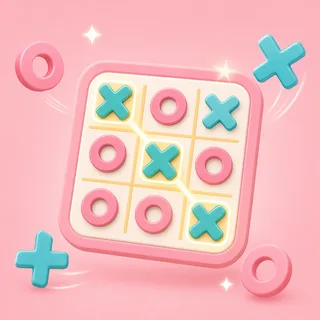
Classic three-in-a-row.
The classic that needs zero explanation. Perfect as a tie-breaker, a reward match, or the sixty-second brain break between activities.
Also known as: noughts and crosses · X's and O's
That's the goal — no rules to teach. Here's how a round of Tic Tac Toe runs.
One screen, two players: tap an empty square to place your mark, then it’s the other player’s go. No devices, no accounts.
Three in a row wins — across, down or on a diagonal. The centre and corners sit on the most lines, so they go fast.
Watch for their two-in-a-row and take the open square before they do. That’s the whole game of it: attack, or block.
One screen is all it takes — no devices, no join codes, no accounts. Pick how many are in and press play.
Pass one screen back and forth — the projector, a tablet at a station, whatever’s nearby. Take turns tapping; it’s the classic exactly as you remember it.
One screen · no devicesSplit the room into X’s and O’s. The class calls the squares, you (or the kid whose turn it is) taps, and every move turns into a little debate.
Whole class · zero prepRun it like a tournament: the winner keeps the board and the next challenger steps up. A queue that entertains itself for as long as you let it.
Keeps the line movingNo prep, no content, no accounts — so it’s the game you reach for when the timing matters more than the topic.
Reset the room between activities. It’s on the board in a single tap — there’s no content to load and nothing to prepare.
Who goes first? Which team picks? A quick round settles it, and nobody argues with the board.
Work’s done and five minutes to spare — a round they’ve earned, with the bragging rights on the line.
Leave it running on a spare device for pairs to play while you work with the rest of the room.
Add one house rule — a correct answer earns the right to place a mark — and noughts and crosses becomes revision for any subject. Bring the questions you were going to ask anyway.
The Arcade is a library of classroom games — quiz shows, word puzzles, sorting rounds and a handful of no-prep classics like this one. Most fill from a single topic box you type once; Tic Tac Toe just needs a spare minute and two willing players.
Every Arcade game starts from the same box: type what you're teaching and the content writes itself — questions, words, clues — ready for the board at the front of the room.
Game types in the Arcade — one topic box fills them all
From typing a topic to pressing play
Student accounts — a code and a first name is the whole login
Steps every time: type it, check it, play it
I typed 'the water cycle' and had a class quiz in ten seconds flat. It's the first tool my whole department adopted.
Two players — or two teams calling the moves while you tap. Winner-stays-on keeps a queue busy for as long as you let it.
No. One screen is plenty — the projector, a tablet at a station, whatever's nearby. Pass-and-play, no setup.
Nothing. There's no content to load — it's ready the moment it lands on your board, which is exactly why it's a great emergency brain break.
Yes. Tic Tac Toe is included on Boardee's free tier with every other game type.
Never. Students join with a code and a name — no emails, no passwords. Teachers don't need an account to try it either.
Same three steps, different game. Type a topic and pick your shape.
Type it in, check the content, press play. The Arcade does the rest.