
1
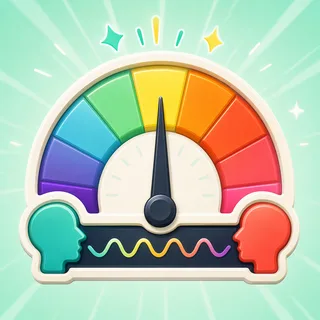
One player sees a hidden target on the dial.
One player peeks at the hidden scoring zone — a fat 4 in the middle, 3s and 2s to either side. Nobody else sees where it sits.
Guess where it lands on the spectrum.
One clue, one dial, and a team trying to read one mind. It turns opinion into a team sport — and doubles as the best discussion warm-up you'll run all week.
Also known as: wavelength · hot and cold
That's the goal — no rules to teach. Here's how a round of Spectrum runs.
One player peeks at the hidden scoring zone — a fat 4 in the middle, 3s and 2s to either side. Nobody else sees where it sits.
They name something that lands on that spot — “homework”, somewhere between underrated and overrated — and that clue is all the class gets.
The room argues it out and drags the needle. Reveal swings the screen open and scores the guess on how close it landed — 4 for a bullseye, down to 2 at the edges.
Spectrum lives on the projector — no student devices, no logins. Same dial, whichever way your class plays best.
Project one dial and the whole room plays it together — the class calls out “left a bit… no, middle!” while you (or the kid whose turn it is) drags the needle. No devices, no join codes, no setup.
Zero devices · zero prepBreak the room into two teams and take turns reading the dial. The score chip keeps the tally, the lead swings back and forth, and it gets loud — the good kind of loud.
One screen · the room does the restDrop one prompt on the board to open a lesson or land the plane at the end. “Underrated to overrated: homework” gets every hand in the air inside a minute — then you're straight into the discussion.
One prompt · every hand involvedIf two words sit at opposite ends — weak to strong, villain to hero, impossible to certain — it's a Spectrum prompt. Type the topic; AI writes the poles and the clues.
The Arcade is a library of classroom games that all drink from the same topic box. When the debate's run its course, that same topic becomes a quiz, a set of flashcards or a sorting round — same class, new game, zero re-typing.
Ready-made from the Discover shelves, AI-built from your topic, or typed by hand — every door ends at the same play button.
Search the Discover shelves — curated games plus rounds shared by other teachers. Find one that fits and press play.
Type what you're teaching and the Arcade writes your Spectrum in under a minute. Check it, tweak anything, play.
Every Spectrum has a plain editor underneath — your exact list, row by row, no AI in the loop.
Every Arcade game starts from the same box: type what you're teaching and the content writes itself — questions, words, clues — ready for the board at the front of the room.
Game types in the Arcade — one topic box fills them all
From typing a topic to pressing play
Student accounts — a code and a first name is the whole login
Steps every time: type it, check it, play it
I typed 'the water cycle' and had a class quiz in ten seconds flat. It's the first tool my whole department adopted.
Two or more — one clue-giver who can see the hidden target, and everyone else as the guessing team. Whole-class works beautifully.
Yes — the same hidden-target dial game. The clue-giver names something between the two extremes, and the team argues its way to a spot on the dial.
No. One screen on the projector and a room full of opinions is the whole setup.
Yes. Write spectrum prompts that fit your class, or let AI suggest them for your topic and grade.
Never. Students join with a code and a name — no emails, no passwords. Teachers don't need an account to try it either.
Same three steps, different game. Type a topic and pick your shape.
Type it in, check the content, press play. The Arcade does the rest.