
1
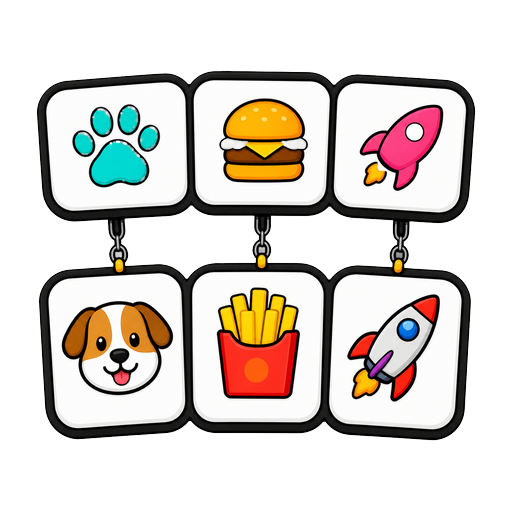
Drag a card across to the one it matches.
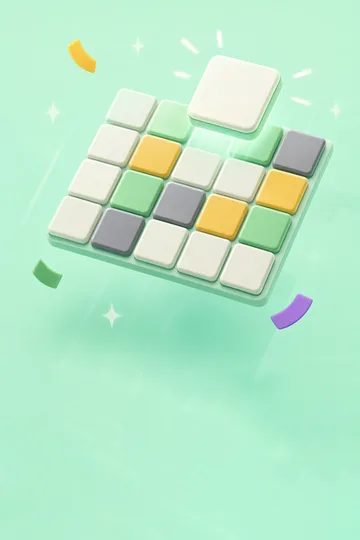
Terms on one side, meanings on the other — up to six pairs on the board at once.
Match each pair together.
Terms on one side, meanings on the other — the drag-and-drop pairing that turns vocabulary review into a table game students actually ask for.
Also known as: matching pairs · match up
That's the goal — no rules to teach. Here's how a round of Matching runs.
Terms on one side, meanings on the other — up to six pairs on the board at once.
Tap works everywhere the drag does, so a finger on the touchboard is as good as a mouse.
Nothing locks until you check, so pairs can be argued over and swapped — then the round is scored on accuracy and time.
The same Matching round works as a front-of-class game, a live device round, or take-home practice. Pick at press-play — nothing to rebuild.
Project one board and the whole class plays it together — students call the matches while you (or the kid whose turn it is) drags. No devices, no setup, no codes.
Zero devices · zero prepStudents go to boardee.app/join and type the six-digit code — phones, tablets, chromebooks, any browser. Everyone gets the same pairs, and the round is scored on accuracy and time.
Join code or QR · no student accountsShare one play link and the same round becomes homework, revision or early-finisher work. Results roll in as each student finishes — score and time, no chasing.
One link · results tracked for youIf your subject has terms and meanings, halves and wholes, causes and effects — it's already a Matching round. Type the topic; AI writes the pairs.
The Arcade is a library of classroom games that all drink from the same topic box. When the pairs go stale, the identical content becomes a quiz, a crossword or a sorting round — same topic, new game, zero re-typing.
Ready-made from the Discover shelves, AI-built from your topic, or typed by hand — every door ends at the same play button.
Search the Discover shelves — curated games plus rounds shared by other teachers. Find one that fits and press play.
Type what you're teaching and the Arcade writes your Matching in under a minute. Check it, tweak anything, play.
Every Matching has a plain editor underneath — your exact list, row by row, no AI in the loop.
Every Arcade game starts from the same box: type what you're teaching and the content writes itself — questions, words, clues — ready for the board at the front of the room.
Game types in the Arcade — one topic box fills them all
From typing a topic to pressing play
Student accounts — a code and a first name is the whole login
Steps every time: type it, check it, play it
I typed 'the water cycle' and had a class quiz in ten seconds flat. It's the first tool my whole department adopted.
One to four players per round — pairs at one device is the sweet spot. Or project it and let the class direct your dragging.
No. It runs whole-class on the projector, or students can join from any browser with a code or a shared play link.
Yes. Give it a topic and grade level and it builds the pairs in under a minute — terms and definitions, words and translations, causes and effects.
Yes. Matching is included on the free tier along with every game type.
Never. Students join with a code and a name — no emails, no passwords. Teachers don't need an account to try it either.
Same three steps, different game. Type a topic and pick your shape.
Type it in, check the content, press play. The Arcade does the rest.