
1
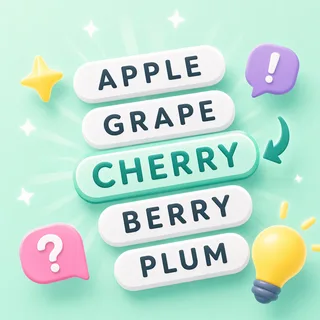
You can see everyone's word but your own.
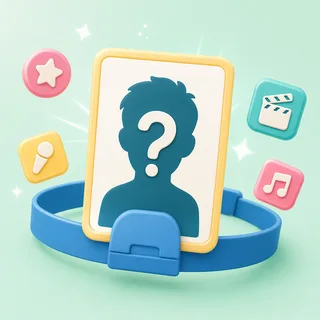
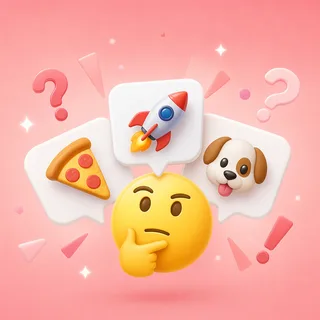
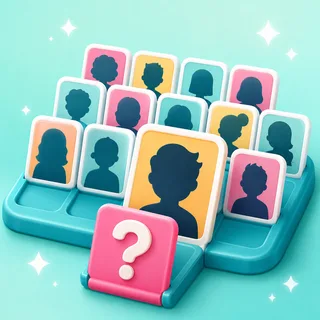
The board deals every player a secret name. You can read everyone else’s head — yours is the only blank in the room.
Guess the secret on your head.
The who-am-I party classic, minus the sticky notes on foreheads. Swap celebrities for scientists, book characters or key terms, and it quietly becomes revision.
Also known as: who am I · famous people game
That's the goal — no rules to teach. Here's how a round of Celebrity Heads runs.
The board deals every player a secret name. You can read everyone else’s head — yours is the only blank in the room.
Fire yes-or-no questions at the group — “Am I real? Am I alive today? Am I a scientist?” — and let the answers narrow it down.
The instant it clicks, call your name. First player to guess their own head takes the round.
Celebrity Heads needs nothing but a shared screen — the projector up front or a tablet at a table. No devices to hand out, no accounts, no codes. Same round, and it doubles as revision.
Project one round and the whole class plays together — the heads go up on the board and the room works them out, calling yes or no as the questions fly. No devices, no codes, no setup.
Zero devices · zero prepHand a tablet to a table of two to six. Everyone can read every head but their own, and they quiz each other as the turn passes round the group. Rotate tables through it as a station.
One shared screen · rotate groupsSwap celebrities for the scientists, authors or key terms you are teaching. Asking good yes-or-no questions about Marie Curie is the revision — the game just turns it into a race.
A party game that doubles as reviewScientists, story characters, explorers, even key terms and landmarks — if your class should know them, they belong on a head. Type the topic; AI writes the name list.
The Arcade is a library of classroom games that all drink from the same topic box. Once the heads have all been guessed, the identical name list becomes a quiz, a set of flashcards or a matching game — same topic, new game, zero re-typing.
Ready-made from the Discover shelves, AI-built from your topic, or typed by hand — every door ends at the same play button.
Search the Discover shelves — curated games plus rounds shared by other teachers. Find one that fits and press play.
Type what you're teaching and the Arcade writes your Celebrity Heads in under a minute. Check it, tweak anything, play.
Every Celebrity Heads has a plain editor underneath — your exact list, row by row, no AI in the loop.
Every Arcade game starts from the same box: type what you're teaching and the content writes itself — questions, words, clues — ready for the board at the front of the room.
Game types in the Arcade — one topic box fills them all
From typing a topic to pressing play
Student accounts — a code and a first name is the whole login
Steps every time: type it, check it, play it
I typed 'the water cycle' and had a class quiz in ten seconds flat. It's the first tool my whole department adopted.
Two to six players per round — each can see everyone's word except their own. Rotate groups through it as a station, or play one round up front for the class.
No. One shared screen is all it takes — the projector for a front-of-class round, or a tablet at a small-group station.
Yes. Tell it your topic and grade — explorers, story characters, geometry terms — and it writes the name list in under a minute.
Yes. Celebrity Heads is included on the free tier along with every game type.
Never. Students join with a code and a name — no emails, no passwords. Teachers don't need an account to try it either.
Same three steps, different game. Type a topic and pick your shape.
Type it in, check the content, press play. The Arcade does the rest.