
1
Clues are revealed one at a time.
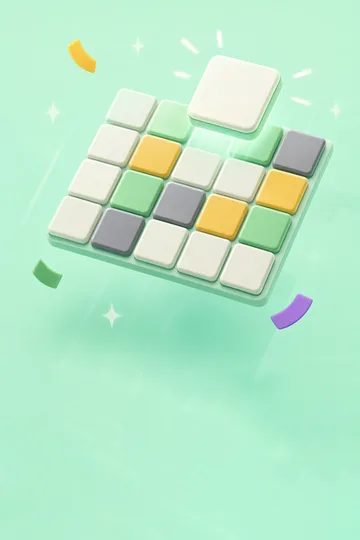
The board starts hidden and clues open one at a time — up to five, each one narrowing the field a little more.
Find the link between the clues.
Clues drop one at a time and the room leans in. Guess early for glory, wait for certainty — every reveal resets the argument.
Also known as: pinpoint · guess the category
That's the goal — no rules to teach. Here's how a round of Thread runs.
The board starts hidden and clues open one at a time — up to five, each one narrowing the field a little more.
Type what links them whenever you're ready. Wrong? No harm — it just opens the next clue and the room argues again.
Name it on the first clue and it's worth the most; every reveal you wait costs a point. Confidence pays.
The same Thread round works as a front-of-class guessing game, a live device race, or take-home practice. Pick at press-play — nothing to rebuild.
Its natural home. Project one round and reveal a clue, pause, and let the whole room call out what links them before you open the next. No devices, no codes, no setup.
Zero devices · zero prepStudents go to boardee.app/join and race to name the connection on their own screens — phones, tablets, chromebooks, any browser. The sooner they lock it in, the more they score.
Join code or QR · no student accountsShare one play link and the same set becomes homework, a warm-up or early-finisher work. Each student works through the connections at their own pace, and their score lands in your results — no chasing.
One link · results tracked for youMembers of a set, steps in a sequence, examples of a rule — if a handful of things share a secret connection, it's a Thread round. Type the topic; AI writes the clues and the link.
The Arcade is a library of classroom games that all drink from the same topic box. When the connection's been guessed, the identical content becomes a quiz, a set of flashcards or a sorting round — same topic, new game, zero re-typing.
Ready-made from the Discover shelves, AI-built from your topic, or typed by hand — every door ends at the same play button.
Search the Discover shelves — curated games plus rounds shared by other teachers. Find one that fits and press play.
Type what you're teaching and the Arcade writes your Thread in under a minute. Check it, tweak anything, play.
Every Thread has a plain editor underneath — your exact list, row by row, no AI in the loop.
Every Arcade game starts from the same box: type what you're teaching and the content writes itself — questions, words, clues — ready for the board at the front of the room.
Game types in the Arcade — one topic box fills them all
From typing a topic to pressing play
Student accounts — a code and a first name is the whole login
Steps every time: type it, check it, play it
I typed 'the water cycle' and had a class quiz in ten seconds flat. It's the first tool my whole department adopted.
Clues reveal one at a time, and the fewer you use before naming the connection, the higher the score — early confidence pays.
One to four players per round, or run it whole-class on the projector with guesses between every clue.
No. Projector-only is the natural way to play; students can also join on their own devices with a code or play link.
Yes. Give it a topic and grade level and it writes the categories and clues in under a minute — or author your own.
Never. Students join with a code and a name — no emails, no passwords. Teachers don't need an account to try it either.
Same three steps, different game. Type a topic and pick your shape.
Type it in, check the content, press play. The Arcade does the rest.